


@gayetyrrell0197
Profil
Registered: pred 3 years, 11 months
What Does It Really Mean To Benefits Of Cloud DDoS Mitigation In Business?
When selecting cloud DDoS mitigation service, there are a variety of aspects to take into consideration. These services offer application-based protection as well as scalability and precise detection. The choice of a service for your company depends on the amount you're willing to spend. Here are some of the most important things to consider when choosing a cloud DDoS mitigation solution. These advantages make it a smart option for a majority of companies.
Pricing as you go
Cloud DDoS Mitigation is accessible in a range of pricing models. Azure users who do not select DDoS Protection Standard, for instance, will pay $0.558 per hour. DDoS Protection Standard Azure users will pay $0.31 per hour. If you opt for a custom solution can expect to pay more. These companies typically have lower costs overall than enterprises, however.
Another crucial aspect to consider is DDoS attack volume. While pay-as-you-go pricing is tempting if you aren't a target for DDoS attacks, the cost can soon rise and you'll have to pay a lot of money. DDoS attacks can be very lasting. Alternatively, service-based pricing offers the base price for yakucap DDoS mitigation, but may also include special pricing for provisioning as well as implementation. These costs must be included into your Total Cost of Ownership (TCO) calculation.
The drawback of cloud DDoS Mitigation is the cost. Cloud instances can be allocated through auction or pay as you go. Storage and bandwidth for networks are determined by their total size. By contrast, inline DDoS protection solutions are installed in the data center of a company. They are strong enough to identify and reduce DDoS attacks on the network, application or SSL-based layers. They are generally faster to implement and can detect DDoS attacks earlier.
Accurate detection
Recent advances in the processing capabilities of network attackers have made it possible to successfully carry out DDoS attacks. This has slowed down the adoption of Cloud computing. These attacks have been expanded to cloud environments with the advent of cloud computing services. Here, yakucap we will explore the challenges of cloud DDoS mitigation and propose an algorithm for its accurate detection.
In recent times, DDoS attacks have been extended beyond the traditional distributed network to Cloud networks, which are the foundation of Industry 4.0. Security issues such as detection of anomalies and intrusions have arisen in Cloud and IoT environments. This paper focuses on the challenges and opportunities offered by machine learning classifiers in regards to detecting DDoS attacks in Cloud environments. We present a lightweight algorithm based on a machine learning framework.
The DDoS attacks primarily target cloud providers using their pay-as-you-go multi-tenancy, auto-scaling, yakucap and multi-tenancy services. Cloud services typically host huge numbers of VMs to offer uninterrupted services to legitimate users. Cloud DDoS attacks can be detected by identifying three key components: network security and network traffic. These two aspects are essential to stop cloud DDoS attacks and help ensure that cloud services don't get disrupted.
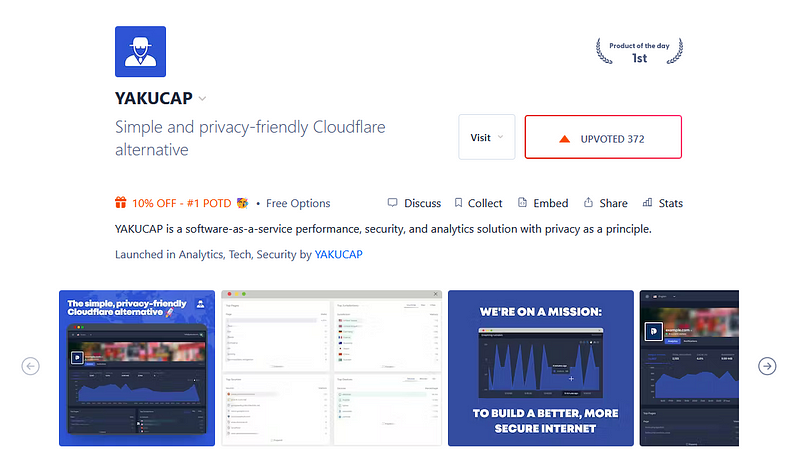
(image: https://cdn-images-1.medium.com/max/800/1*7KmKqYLKSjfHyawCyQnm1g.png)Traditional DDoS mitigation solutions can be costly, however, they are flexible and offer control. The drawback of hybrid DDoS mitigation is the difficulty of integration with cloud-based solutions. It isn't always easy to integrate a hybrid DDoS mitigation solution with various cloud services that have different hardware configurations. It may take some time to integrate cloud DDoS protection and cloud-based solutions.
Scalability
Cloud DDOs mitigation services must be scalable, as attacks increase in bandwidth, and often surpass several gigabits. However the standalone devices for traffic scrubbing are not able to handle both legitimate and malicious traffic. Scalability is important since attacks can have a negative impact on critical services. The ability to scale cloud DDOs mitigation services is determined by the 44 points of presence (PoPs) of Imperva that are strategically located throughout the globe.
Traditional volumetric DDoS attacks consume more bandwidth. Application-layer DDoS, however requires a smaller bandwidth, and is often not detected until system resources become overwhelmed. Since attacks that are based on layer-7 require low bandwidth, traditional security tools often identify them as legitimate traffic, which allows attackers to sneak away without being detected. While it's not as effective as network-level volumetric attack the application layer DDOs remain the most popular method to shut down cloud services. Cloud providers employ CSPs for protection of their networks so it's essential to protect that layer.
Cloud auto-scaling mechanisms present new security threats. If an attacker can discover an avenue to trigger the autoscaling mechanism, like the Yo-Yo attack which is a serious threat, it could result in performance loss. The auto-scaling mechanism could be misused by an attacker and the damage that follows is extremely high. Cloud auto-scaling systems are susceptible to Yo-Yo attacks which can cause huge financial losses to organizations.
Cloud-based DDOs mitigation strategies are still capable of preventing persistent, large-scale attacks in mere seconds, despite the limitations. By contrast, #1 POTD on-premises DDoS mitigation solutions are limited by the hardware that is on-site. They are similar to a fire department responding to an emergency call. They must bring their own water to put out the fire. On-premises solutions cannot keep up with the rapid-moving fire.
Protection via applications
The advantages of cloud computing based on application DDoS mitigation are obvious However, there are some important points to be aware of. While the technology isn't new, it's far from being perfect. It can be beneficial to know the reason this type of defense is required. In simple terms, it can help keep your cloud services running smoothly. With the assistance of a cloud security provider (CSP) you can shield your application from DDoS attacks.
While traditional DDoS protection methods are capable of preventing or minimising DDoS attacks, they are not able to guard against attacks on the application layer. These attacks are unique and require more sophisticated defense strategies than traditional DDoS. To stop these attacks an application-based cloud service requires understanding how each individual application works and if the traffic is legitimate. This allows the security system to prevent unauthorized access to the application.
A hybrid approach blends cloud-based and on-premise protection solutions. It enables you to protect against both local and volumetric DDoS attacks. You can combine both solutions to create a hybrid solution. This allows you to track attacks better and develop tailored mitigation strategies. Cloud-based application-based DDoS mitigation allows your company to guard against DDoS attacks, while still being cost-effective. You can also get an exact report on the amount and size of attacks as well as the mitigation actions that are taken.
While traditional DDoS protection is excellent for small-scale attacks however, cloud-based application-based DDoS mitigation is crucial for larger organizations. Many cloud service providers offer DDoS protection for each customer. These services are usually more complex and typically have more per month. They also offer bespoke DDoS protection profiles and alerting capabilities. They also provide 24-hour monitoring of your website.
Utilizing the Nexusguard Managed DDoS Mitigation Platform can be a powerful cloud-in-a-box deployment. It seamlessly integrates Nexusguard's proprietary technologies into its global cloud scrubbing. It defends against network-based DDoS attacks and application-based DDoS attacks. It is completely flexible and future-proof. It also allows you to easily upgrade to new technologies as they become available.
Website: https://yakucap.com/blog/we-managed-to-reach-1-potd-on-producthunt-heres-how-we-did-it/
Diskusné Fóra
Počet vytvorených tém: 0
Počet reakcií: 0
Rola: Účastník (Participant)